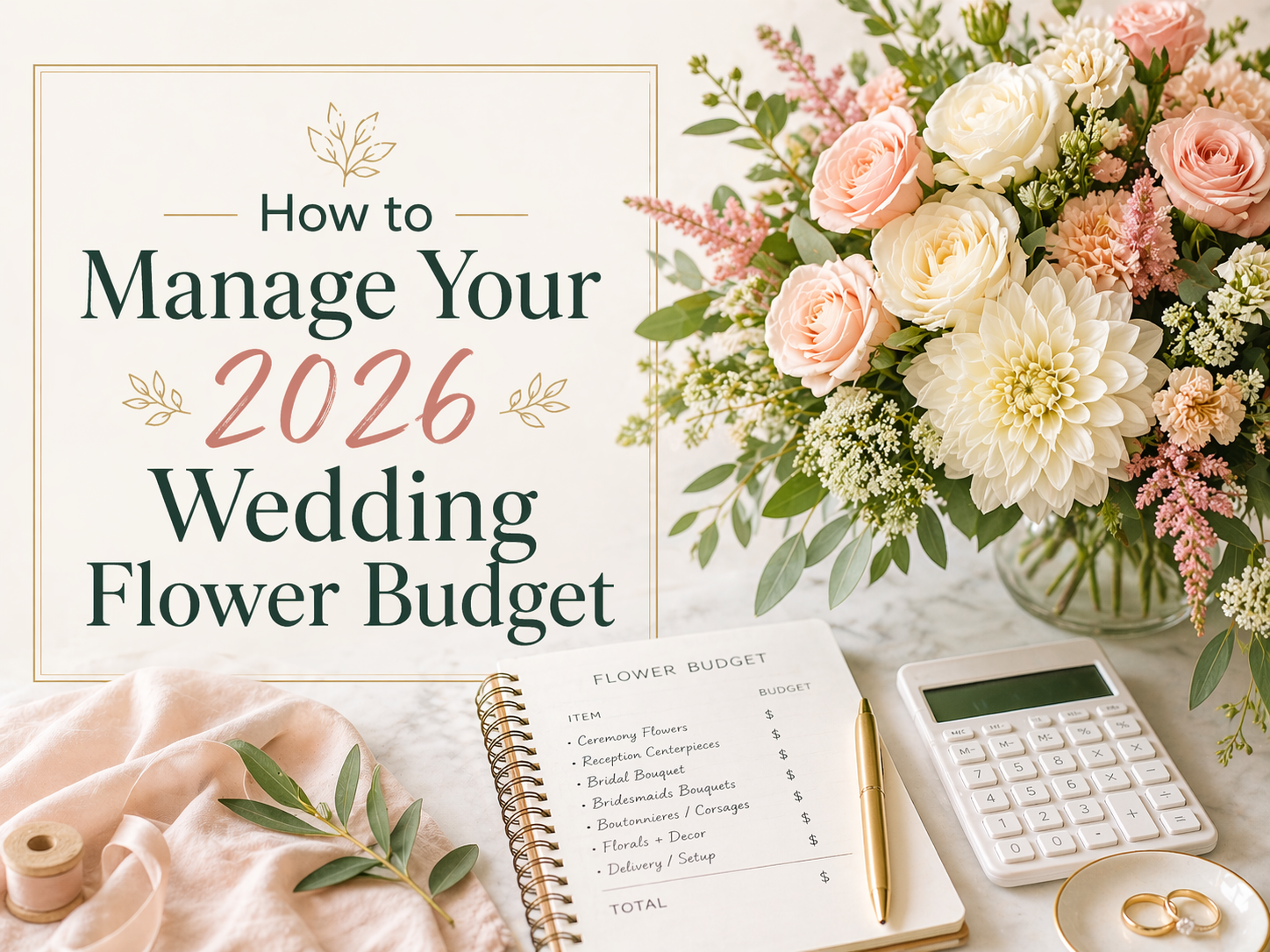
Planning a wedding in 2026 comes with a new set of financial realities. According to the Hitched 2025 National Wedding Survey, the average cost of a UK wedding has climbed to over £23,000, with flowers alone now averaging around £1,050 to £1,130 for small weddings. However, industry data from Bridebook and specialist florists suggest that for a "full service" wedding - one that includes bouquets, buttonholes, ceremony decor, and reception centrepieces - most couples are actually investing between £1,500 and £3,000 on their wedding flowers. With wholesale floral prices having jumped by nearly 40% in recent years due to import costs and energy hikes, it is important to be smart with your floral budget. Here is how to keep your floral budget under control without losing the luxury feel.
Reuse your decor
Do not pay for two sets of flowers when one will do. Professional florists in 2026 are increasingly designing for portability. Ceremony arrangements (like large pedestals or long and low arrangements) can cost between £200 and £800. By moving these to the reception entrance or behind the top table, you effectively double their value. Flower meadows are another great example of movable decor - have them frame your aisle, then move them to frame the top table or bar.
Reuse the bouquets
Ask your venue to provide empty vases for the bridesmaids' bouquets. Letting them sit in a box under a table is a waste. Use them as instant decor for the bar or cake table.
Fill up on filler flowers
You do not need a bouquet of 20 peonies to make a statement. Instead, trust your florist to use a mixture of hero and filler blooms to get more wow factor while being mindful of cost. If you are tempted by bouquets that are flower-only (no foliage or fillers, just impressive high-end blooms), you may need to compromise on size to keep the overall cost in line with bouquets that use fillers.
Greenery & Textures
The 2026 Wedding Trends Forecast highlights "living florals" and "greenery-forward" designs. You can source your own potted plants as part of decor or to frame the aisle. Potted ferns, herbs like rosemary, and Italian ruscus are significantly cheaper than cut flowers and create a lush, overflowing look for a fraction of the price. You can also take these home and grow them for a living memory of your wedding day.
Be Seasonally Strategic
The cost of a bouquet can jump by 40 to 60 percent if the flowers have to be imported from outside the UK or the Netherlands during their off-season.
- Spring: Focus on tulips and narcissi.
- Summer: Embrace dahlias and sunflowers.
- Winter: Use hellebores and evergreens to avoid the Valentine's Day price surge on red roses.
Focus on vibe, not specifics
Trust your florist to replicate the vibe you are looking for without getting caught up on specific flowers or varieties. Florists are often providing quotes for weddings two years in advance when the price of every stem changes daily. The more flexible you are with the flowers you want, the more value your florist can provide. We simply do not know how many stems of a specific flower will be available, but we will always try our best to source the best options to fit your aesthetic and budget.
Be honest
If you have a specific budget in mind, tell your florist. If we need to change the size or scale of items, we will make it work. If we simply cannot make your budget fit your requirements, we can be upfront and work with you to decide on areas to cut.
Want transparent pricing?
If you would like to know more about my wedding floral pricing, simply download my wedding guide with transparent pricing.