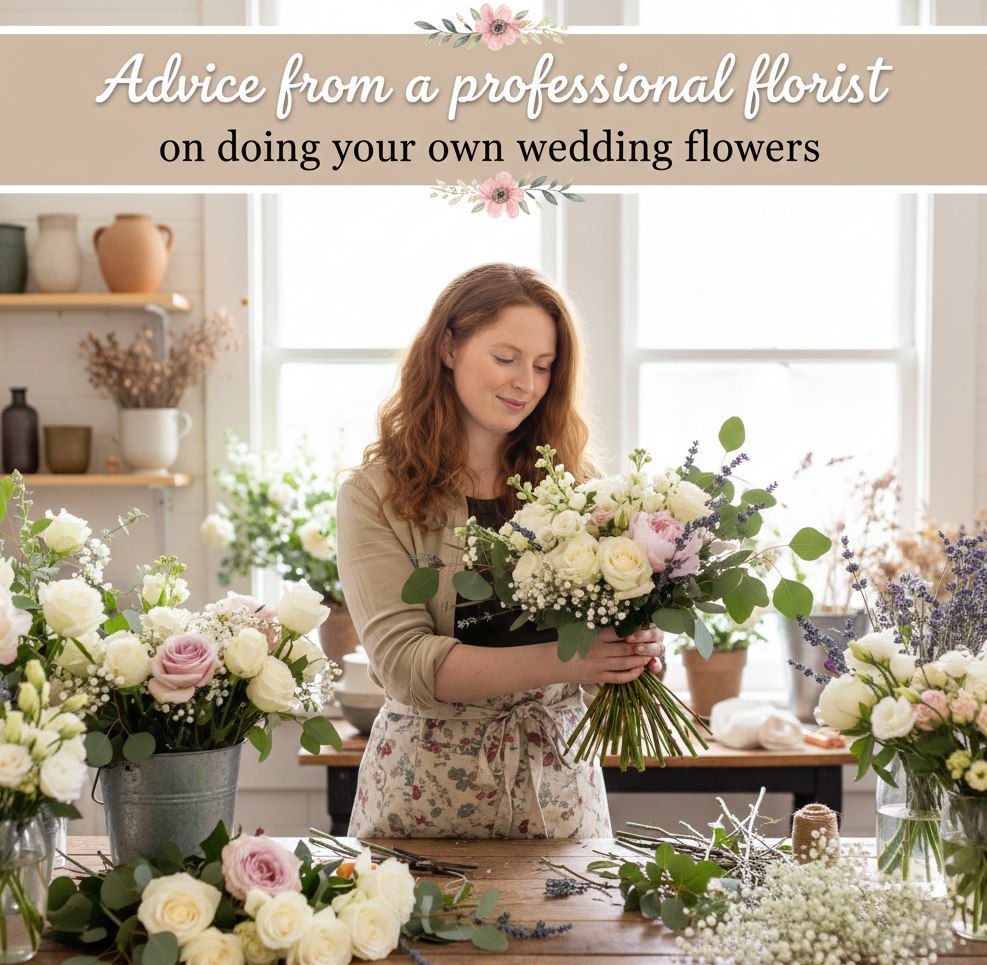
Weddings and wedding budgets come in all shapes and sizes and I am definitely here to support the DIY brides. Here are some pieces of advice for anyone thinking of doing their own wedding flowers.
Preparation and research
Look into:
- Seasonality: When is the wedding? What will be available? What will be expensive? Seasonality of wholesale products is not the same as what you will see in your garden.
- Longevity: Which flowers will survive out of water (for bouquets and buttonholes)?
- Wholesaler: Can you locate a wholesaler that sells to the public? Many will want you to be a business but there are some that will sell to the public.
- Foliage: It isn't just about the flowers! Foliage can completely change the vibe so take some time to work out what foliage you will need.
- Vessels: What materials will you need? Floral foam? Ribbon? Vases?
Ordering
- Lead time: Do not get the flowers the day before the wedding! Flowers need at least 48 hours to hydrate and open up. This time frame also varies by flower - lilies you will want to have delivered 1 week before if you want them to open in time.
- Storage: Whilst the flowers are hydrating you need to keep them in a cool, dry, dark place in water. Get yourself lots of buckets and plan ahead. A shed or garage can work (depending on the weather).
- Prices: Flower prices vary every single day so be prepared to be flexible.
- Quantity: Make sure you allow for a little wastage. Don't get the exact number of stems that you need as you can guarantee that at least 1 stem will break.
Conditioning
- Buckets: Have clean buckets with water and flower food ready to go. Don't fill them too high with water as some stems will go soft.
- Green waste: Be prepared for leaves to go everywhere! Have a plan for dealing with green waste - compost?
- Research: Most flowers are conditioned in the same way but some are divas. Hydrangeas are particularly fussy and will want their heads dunking in water.
Arranging
- Allocating: Allocate a number of each stem for each arrangement you are making so that you don't run out or have uneven arrangements.
- Timing: Do anything that is in water first, then anything in foam, then anything completely out of water. Only do buttonholes at the last minute and you can store them in a plastic box with some damp (not wet!) tissue to keep them hydrated.
- Tools: Make sure you have lots of twine, ribbon, pins, scissors, etc.
Storage and transport
- Storage: Where will you keep your flowers overnight? Have you got somewhere cool and dry? Do you need to load them into a car/van to save time in the morning?
- Transport: How will you keep everything from falling over/getting crushed? You can attach plastic bags of water to the bottom of bouquets using elastic bands. Remove water from vases so that there is no risk of spills in transit. Get yourself lots of crates and boxes to make transport easier.
- Venue: Let your venue know your plans and they should be able to help you place your florals. Larger items may need securing or weighing down. You can use zip ties and heavy objects or attach to parts of the venue (if the venue allows).
And, of course, practise making the arrangements! Get some cheap supermarket flowers to practise making a bouquet so that you have full confidence when it comes to the wedding itself.
Let me know if you have any questions or would like some more details. I have done more detailed videos on corsages, buttonholes and bridal bouquets so you can take a look at those. I have also done a vlog showing you the prep work in the week leading up to a wedding.